
Packing list
Included per shipment with lot and serial mapping where available

PCB starts from 5 working days, PCBA from 10. Shipment terms and lot documents are locked in the same release flow before goods leave the factory.
Date commitment starts after revision lock, BOM risk review, and test scope sign-off. The window includes manufacturing and shipment preparation. Destination import customs is outside that window and is planned as a separate lane step.
| PCB prototypes | from 5 working days |
|---|---|
| PCBA prototypes (5–50 units) | from 10 working days |
| Pilot PCBA (100–1,000 units) | 3 to 5 weeks after material readiness |
| Series PCBA | 4 to 8 weeks |
| Mass production | scheduled per rolling quarterly forecast |
| Cable harness pilot | from 2 weeks after formboard sign-off |
| FCT fixture build | 1 to 3 weeks based on fixture complexity |
Most shifts come from supply exposure, fixture delay, or revision churn after material cut-off. SMT line occupancy is usually not the bottleneck when release discipline is maintained. For active programs, shortage escalation starts before cut-off and is tracked in the same thread as production release.
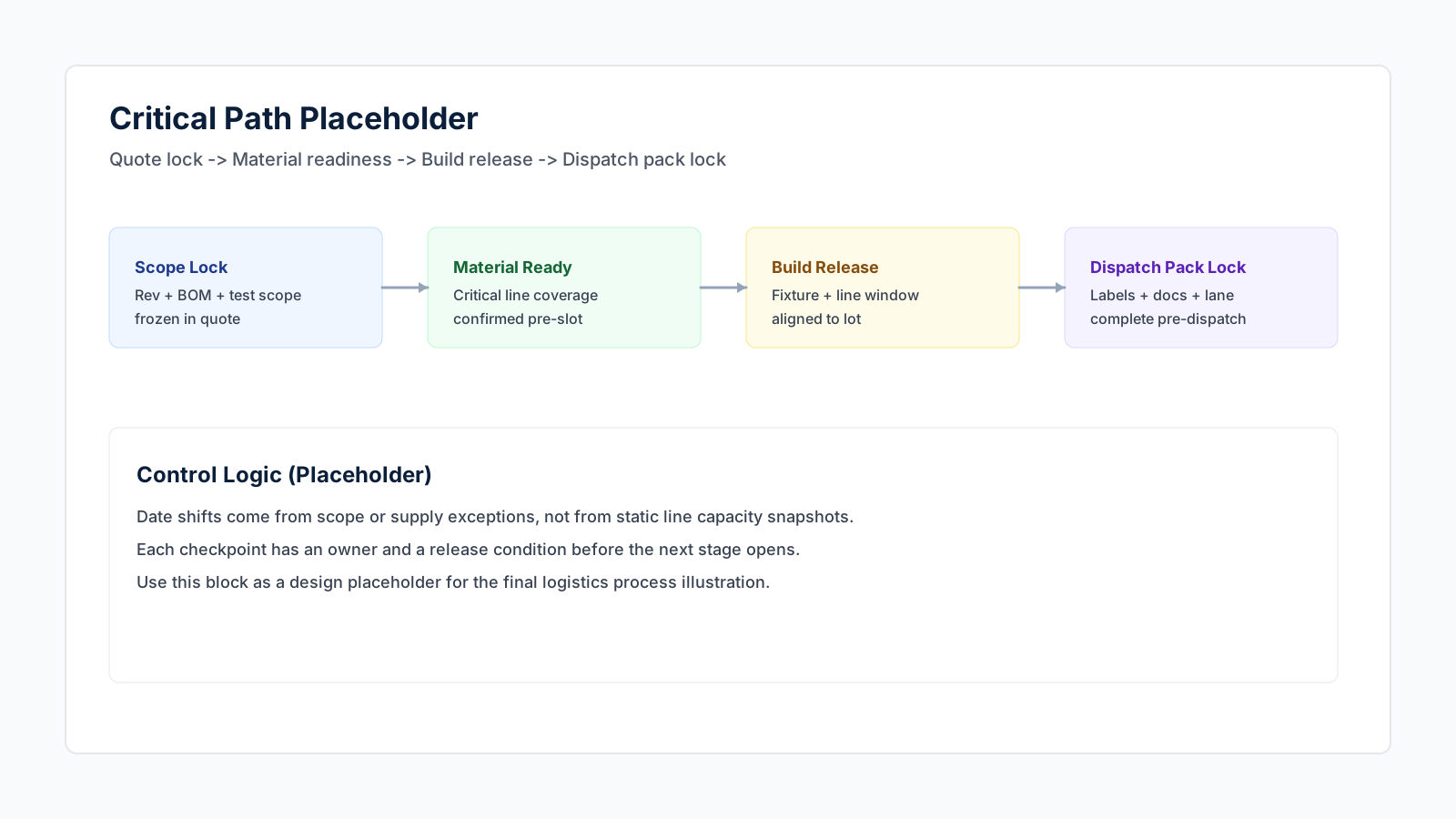
Logistics date is controlled by four locked checkpoints: scope freeze, material readiness, build release, and dispatch pack lock. Missing one checkpoint shifts the shipment window even when line capacity is available.
| Checkpoint 1 | Revision lock + BOM risk class + test scope fixed in quote |
|---|---|
| Checkpoint 2 | Material readiness on critical lines before build slot confirmation |
| Checkpoint 3 | Build release and fixture readiness aligned to production slot |
| Checkpoint 4 | Dispatch pack lock: labels, docs, lane data complete |
Exception flow starts before cut-off, not after the line stops. Shortage exposure, late revision requests, and fixture delays are escalated through one route with owner, decision timebox, and release impact record.
Register the return lot with RMA number, failure class, and destination point.
Route shipment to the originating site or designated regional hub.
Run incoming triage and assign disposition path.
Issue analysis output in the reporting window agreed for the program.
Supported Incoterms include EXW, FCA, FOB, CIF, and DDP. Carrier can be customer-nominated or factory-managed by lane. Handoff package is locked before dispatch so shipping, quality, and finance records stay aligned to the same lot release.
Send your manufacturing package to start scope review.