

Isolation devices (digital isolators, transformers, opto-couplers) need creepage and clearance respected at panelization — courtyards must reflect this.
Industrial automation PCBA for long-life control programs.
PLC, I/O, drive, and isolated interface boards plus cabinet harnesses, with lifecycle and alternates planning for multi-year production runs.
- 10+ y
- lifecycle target
- Cl. 2/3
- IPC quality classes
- ICT + FCT
- validation per serial
- Multi-site
- capacity for ramp continuity
What we manufacture in this vertical
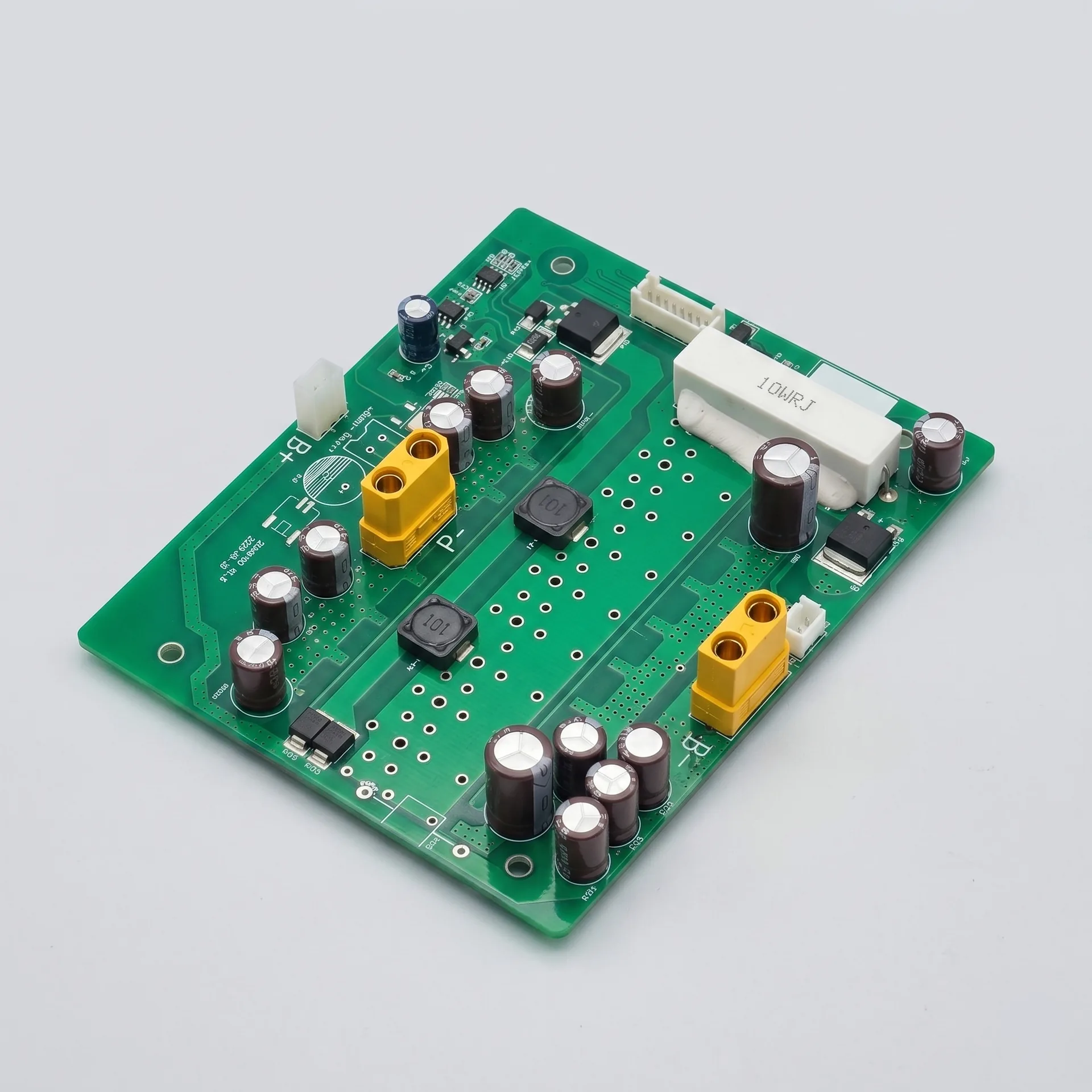
PLC processor and CPU module PCBA.
Digital and analog I/O boards (8 / 16 / 32 channels, isolated and non-isolated).
Motor-drive control PCBA (servo, VFD, BLDC).
Smart-meter and energy-monitoring module PCBA.
Long-life supply considerations
Industrial programs are run for 7–15 years. Manufacturing decisions made on day one determine how much pain shows up in years three to ten. We treat BOM hardening as part of the manufacturing engagement, not as a customer's problem.
BOM screened for EOL / NRND / Last-Time-Buy positions before the first SMT run.
Qualified alternates listed and pre-tested where the customer accepts substitution.
Strategic stock of long-lead components held against rolling forecast on long programs.
Certification context (manufacturing-side)
- UL listing — production lot identification, label format and authorized component lists supported on the line.
- CE — manufacturing records compatible with the customer's technical file.
- ATEX / IECEx (where the customer holds the certificate) — controlled assembly per documented work instructions.
- Functional safety (IEC 61508 / IEC 61511 — customer responsibility) — production traceability and component lot retention supported.
Environmental envelope we build to
| Operating temperature | Industrial: −40 °C to +85 °C |
|---|---|
| Humidity | Up to 95% RH non-condensing |
| Vibration | Per drawing; conformal coating supports cabinet-mounted profiles |
| EMC | Manufacturing-side controls per drawing (cable routing, shield termination) |
| Coatings | Acrylic and urethane standard; silicone and parylene on request |
Communication interfaces — production-side notes
Bus terminations (RS-485, CAN) should be jumper-selectable or DNP-loadable so that production can deliver the same board into terminated and non-terminated nodes.
PoE / PoE+ designs need thermal images on the first article — common cause of field failures is undersized copper around the magnetics.
Ethernet magnetics with high pin count benefit from X-Ray sampling at production — open joints under shielded cans are not visible on AOI.
What to think about before sending us files
- Test points exposed on a single side wherever possible — fixturing for long-running programs gets expensive when both sides are required.
- Programming and debug headers DNP-loadable for production vs depot configurations.
- Connector orientation marked on the silkscreen and assembly drawing — long programs change operators repeatedly.
- Mechanical hold-down points respected on the panel — boards with sensors near the rail crack on depanelization.
- Conformal coating mask defined as a layer, not as a note.
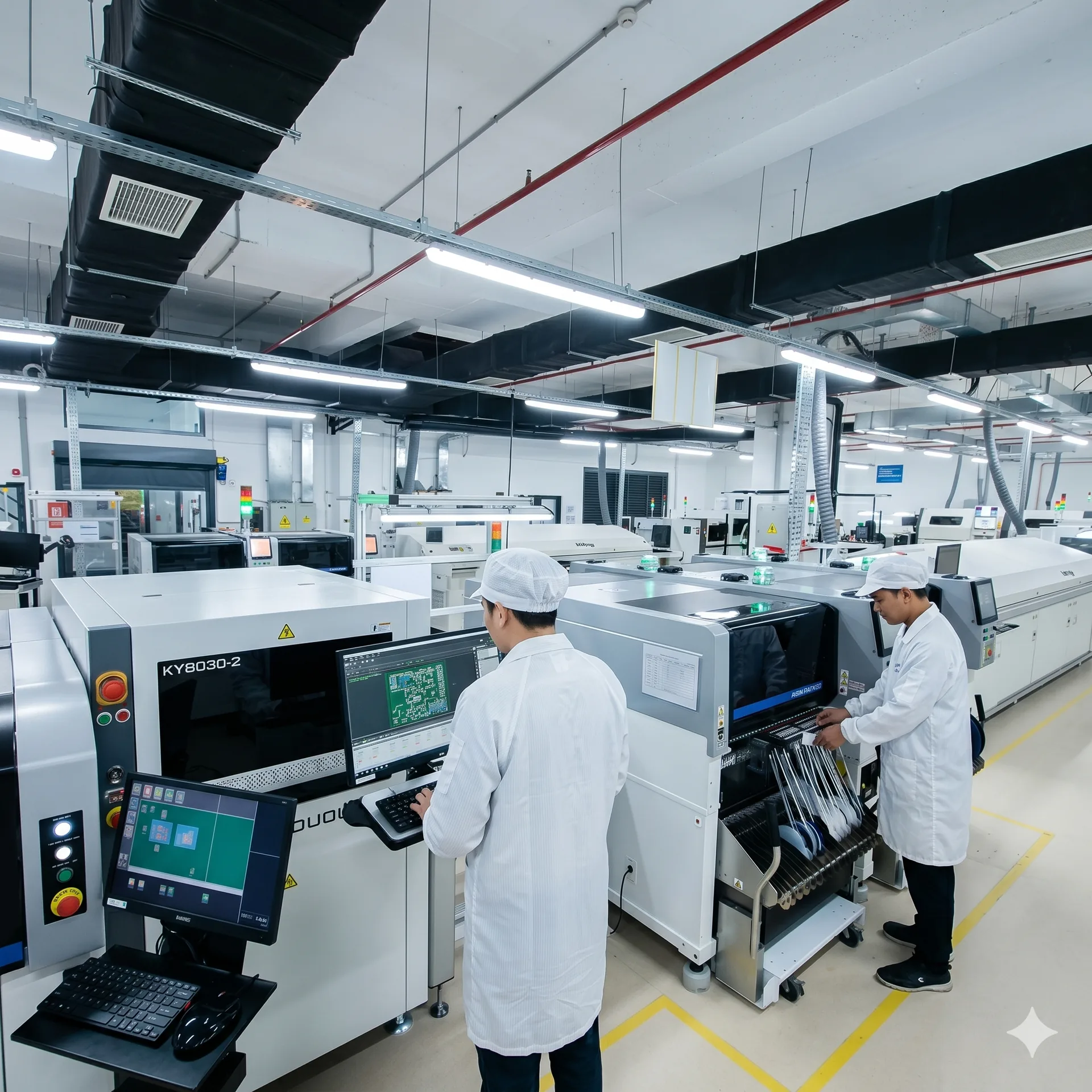
What we run on the line for industrial PCBA
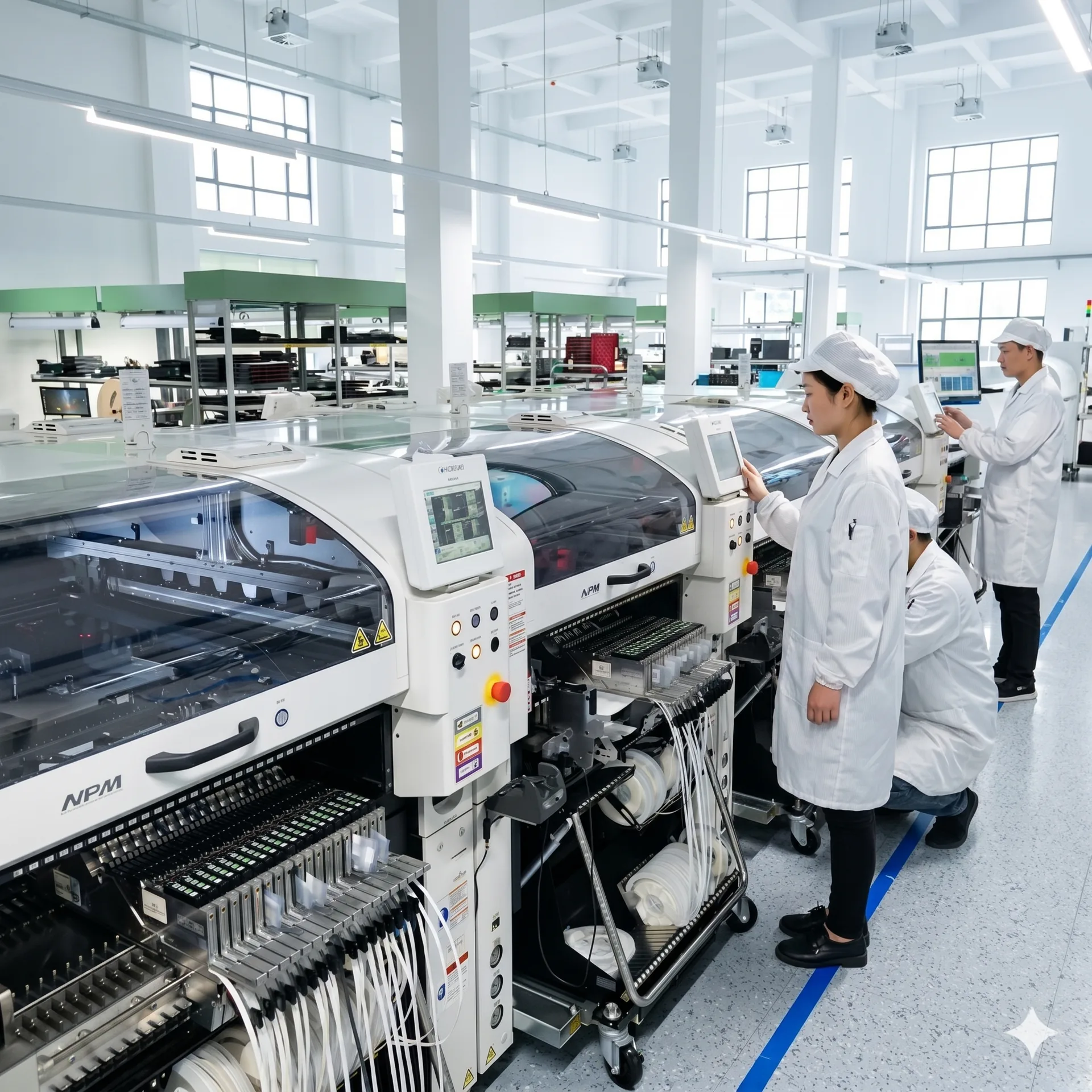
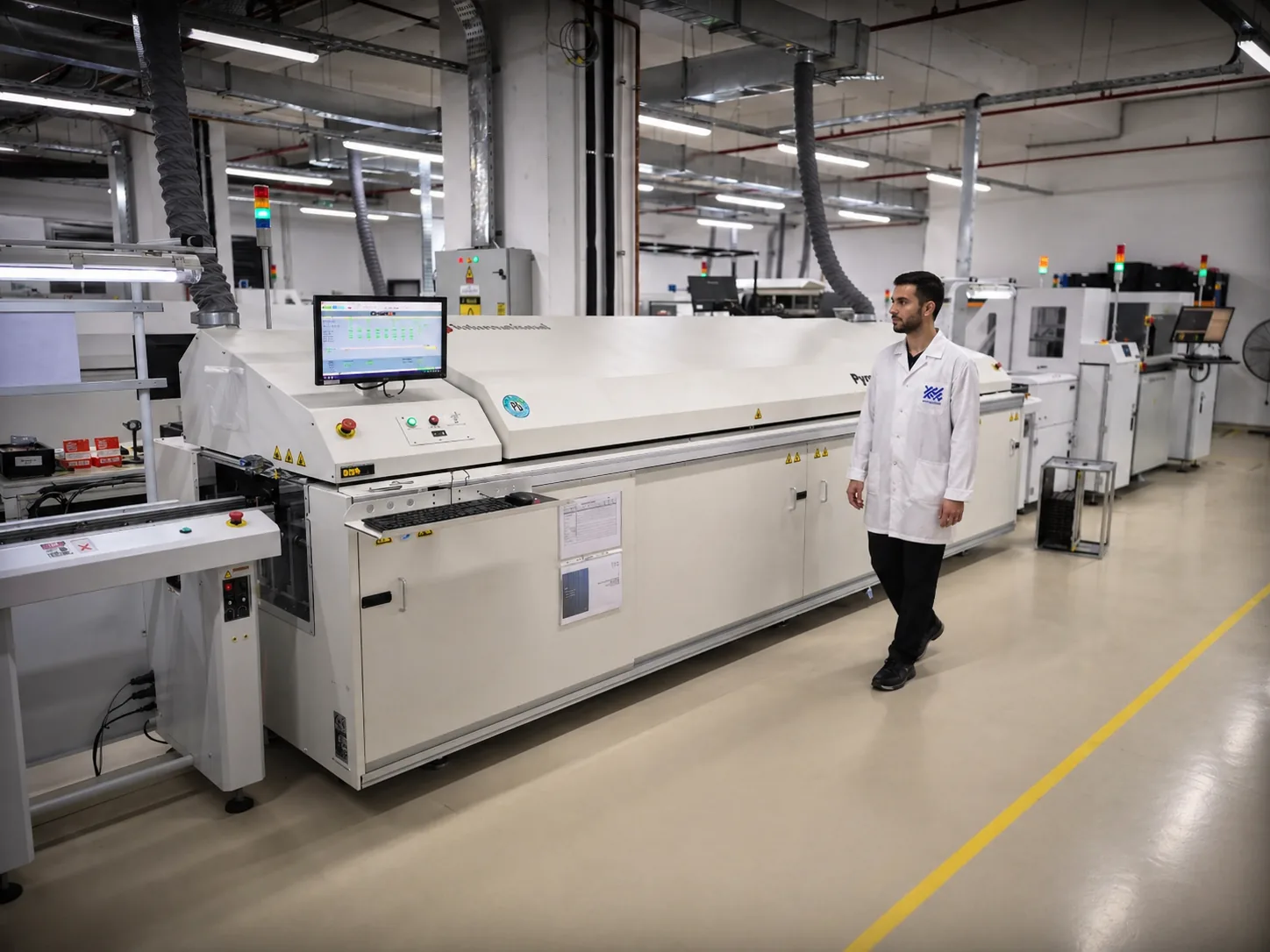
- Mixed SMT and THT with selective soldering; manual rework for connectors and large electrolytics.
- Conformal coating (acrylic, urethane) for industrial environments; silicone for thermal exposure.
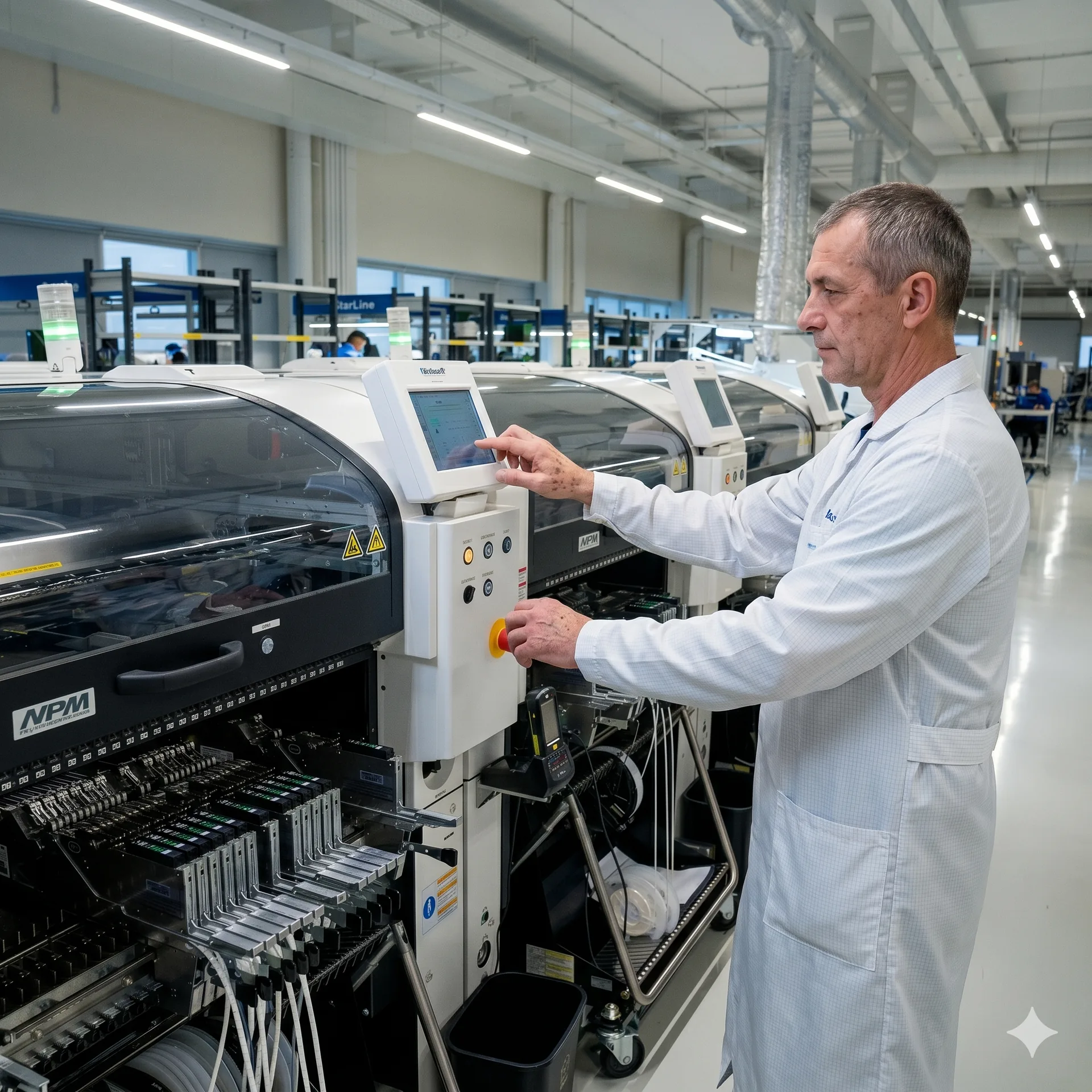
- FCT under simulated bus traffic on RS-485, CAN and Ethernet.
- Burn-in (when specified) on power and motor-drive boards.
- Per-unit serialization with laser marking; programming on the line for MCU-based modules.
Documentation we produce per program
FAI on first article and on every revision change.
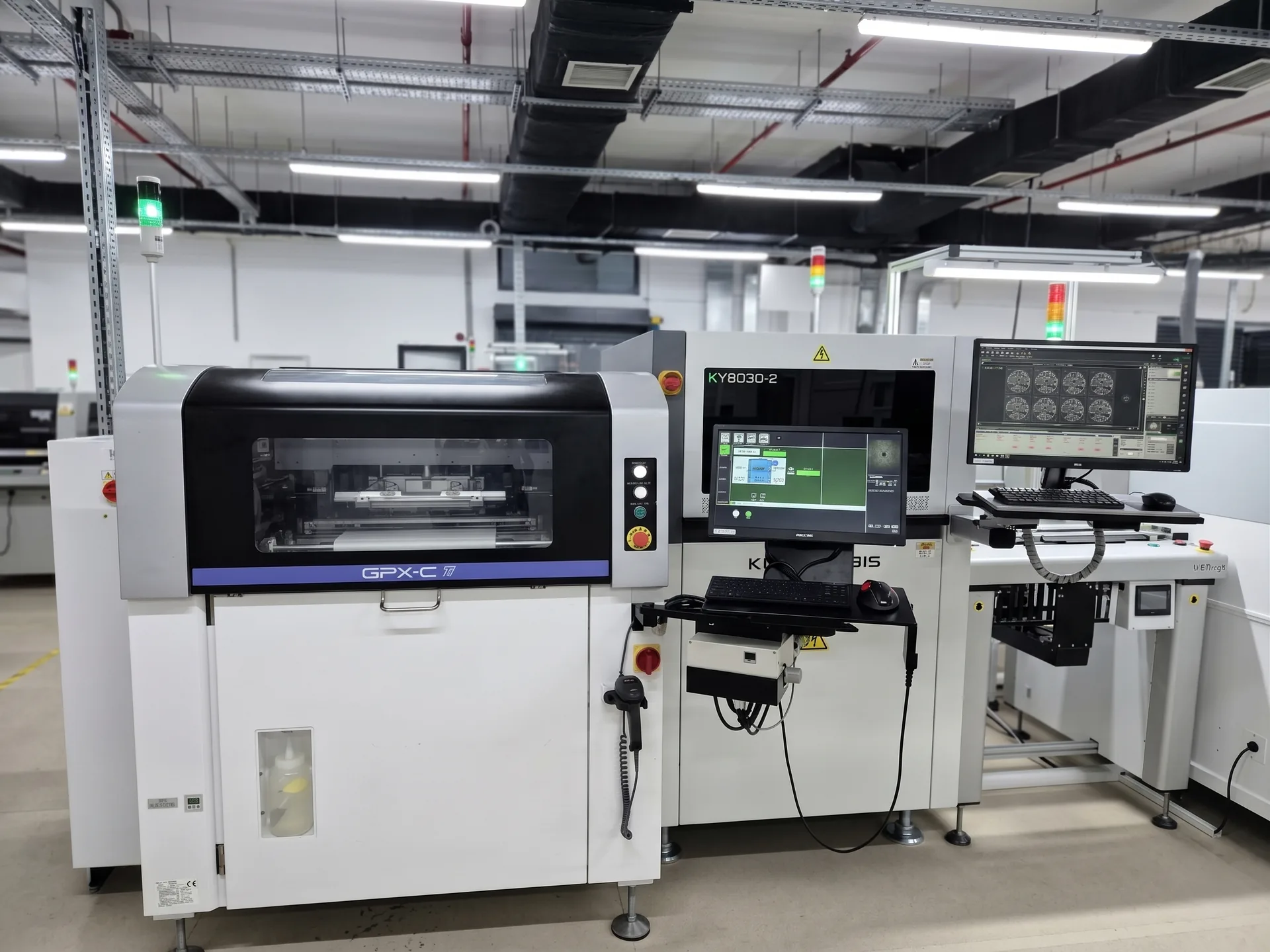
AOI / X-Ray sample reports per lot.
ICT and FCT pass-fail logs per serial.
Burn-in logs (when applicable).
Per-program EOL/NRND watch list with quarterly updates.
Common pitfalls we see in industrial handoffs
- 1. BOM uses a manufacturer part with no second source — fine on day one, expensive on year three.
- 2. Test points placed under shields or on both sides — fixture cost doubles, throughput drops.
- 3. No revision history attached to the manufacturing package — line picks up the wrong version after a customer change.
- 4. Conformal coating mask defined in a PDF note — operator interpretation diverges across shifts.
- 5. PoE thermal margins assumed; first article shows hotspots on the magnetics.
Representative cases
PLC processor module PCBA — tight-tolerance PCB, isolated RS-485 and Ethernet front-end, ICT + FCT validation.
Industrial smart camera PCBA (Edge AI) — rigid-flex assembly, image-sensor calibration on the line.
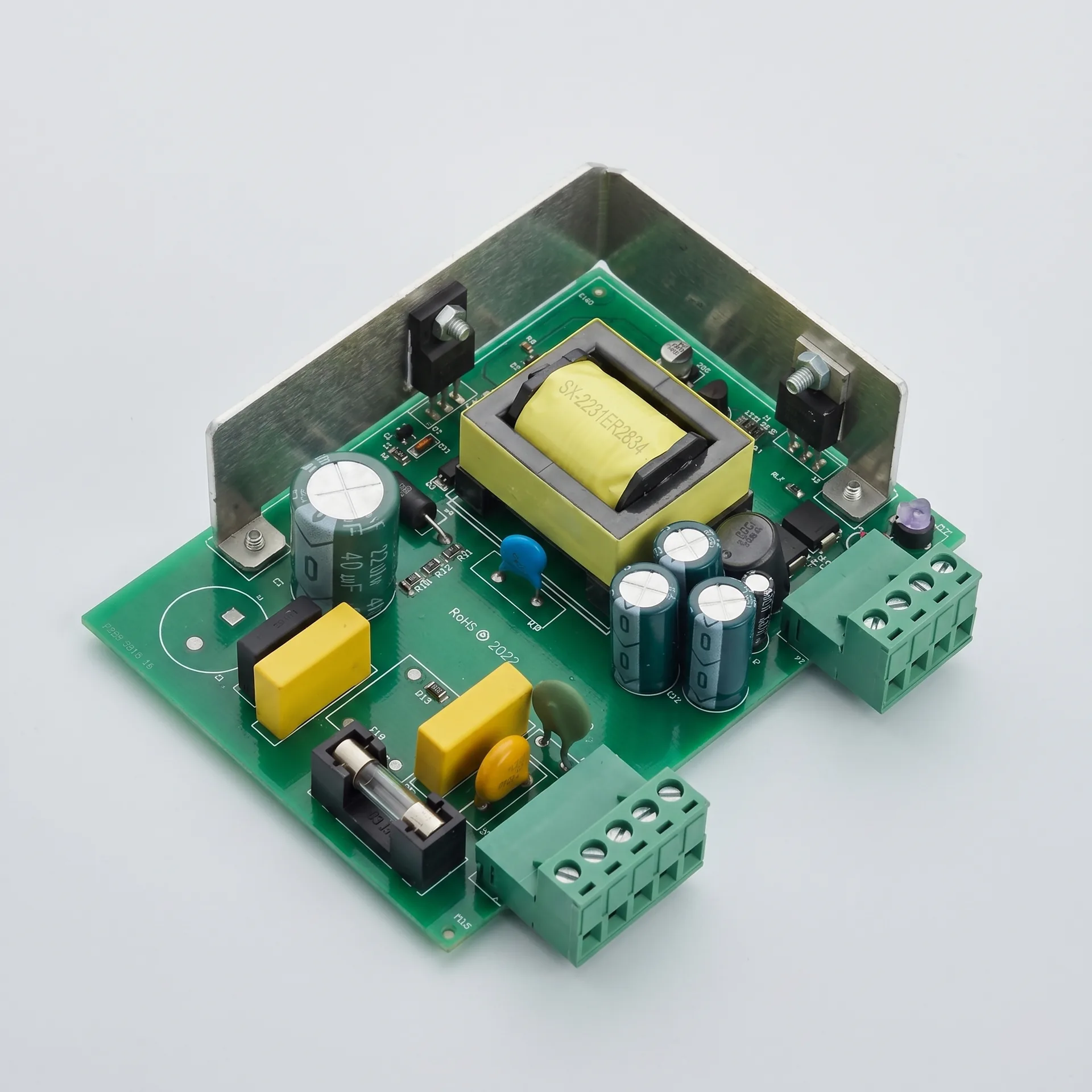
Three-phase motor-drive control board — heavy-copper PCB, IGBT package assembly, conformal coating, burn-in on first article.
Next step
Send your manufacturing package to start scope review.