

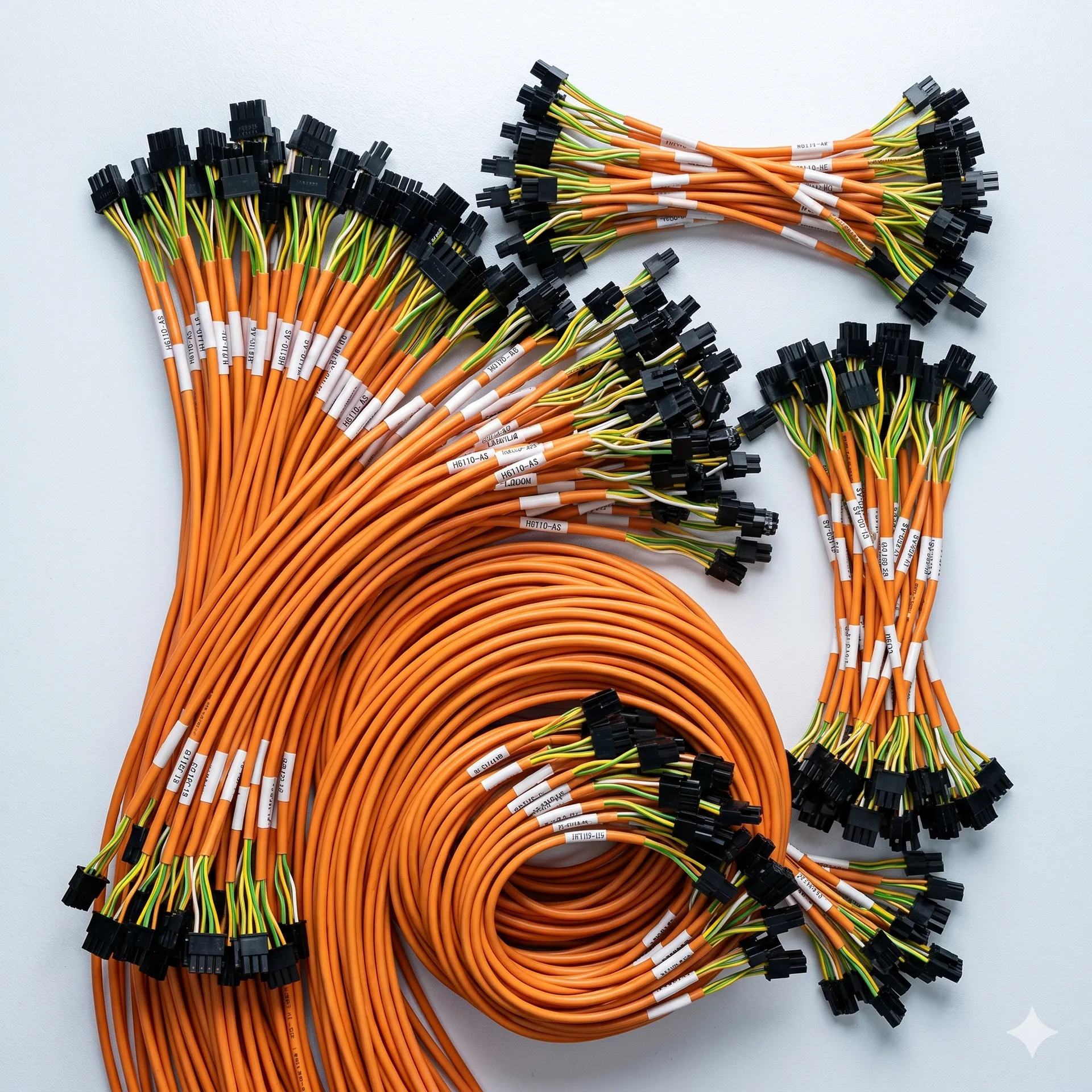
Cable harness manufacturing with 100% continuity testing.
From internal jumpers to sealed branched harnesses, with crimp validation, overmolding, and lot-level documentation per release.
- 100%
- continuity test
- 8 mm²
- max conductor
- IPC/WHMA-A-620
- process logic
- Class 2 / 3
- available on request
Processes
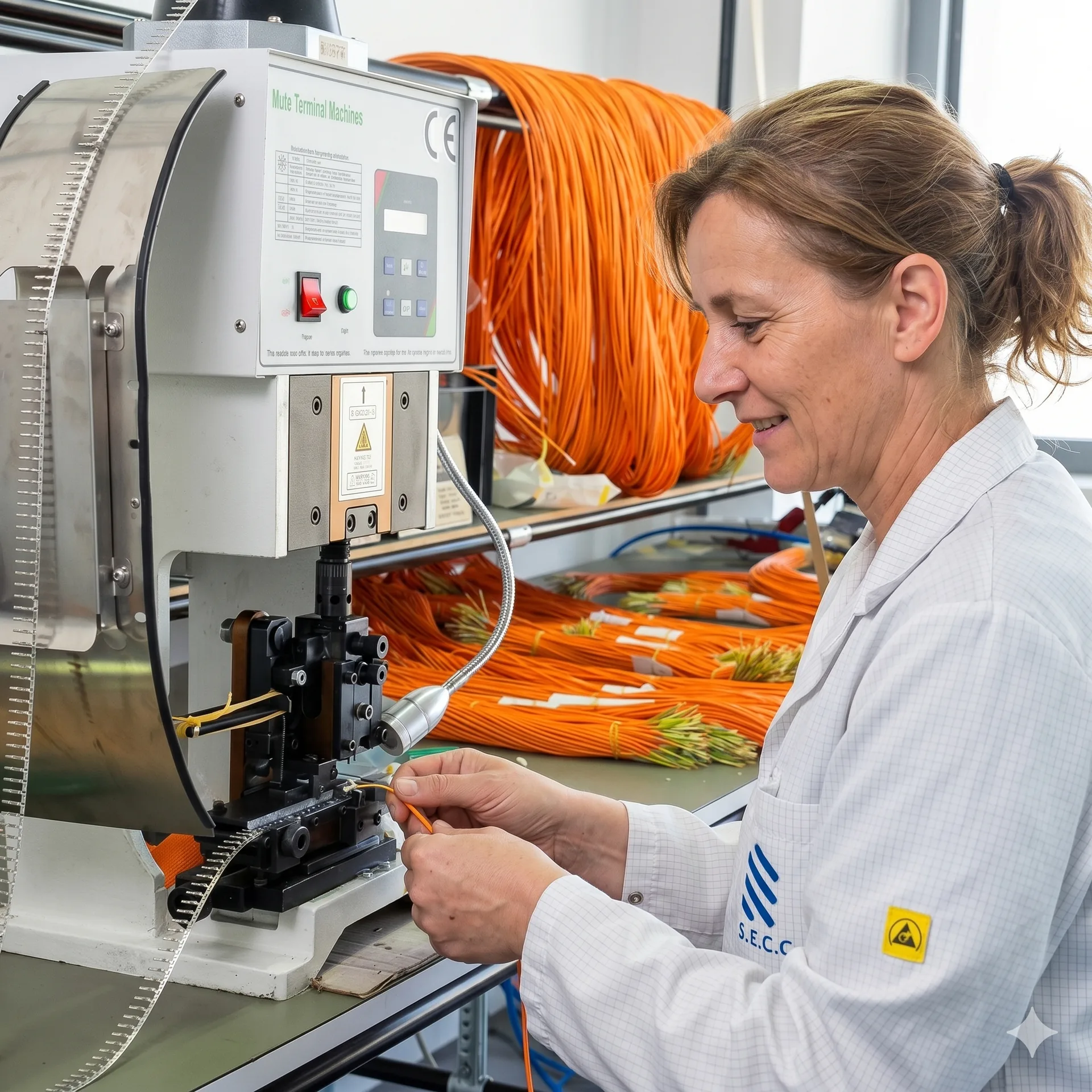
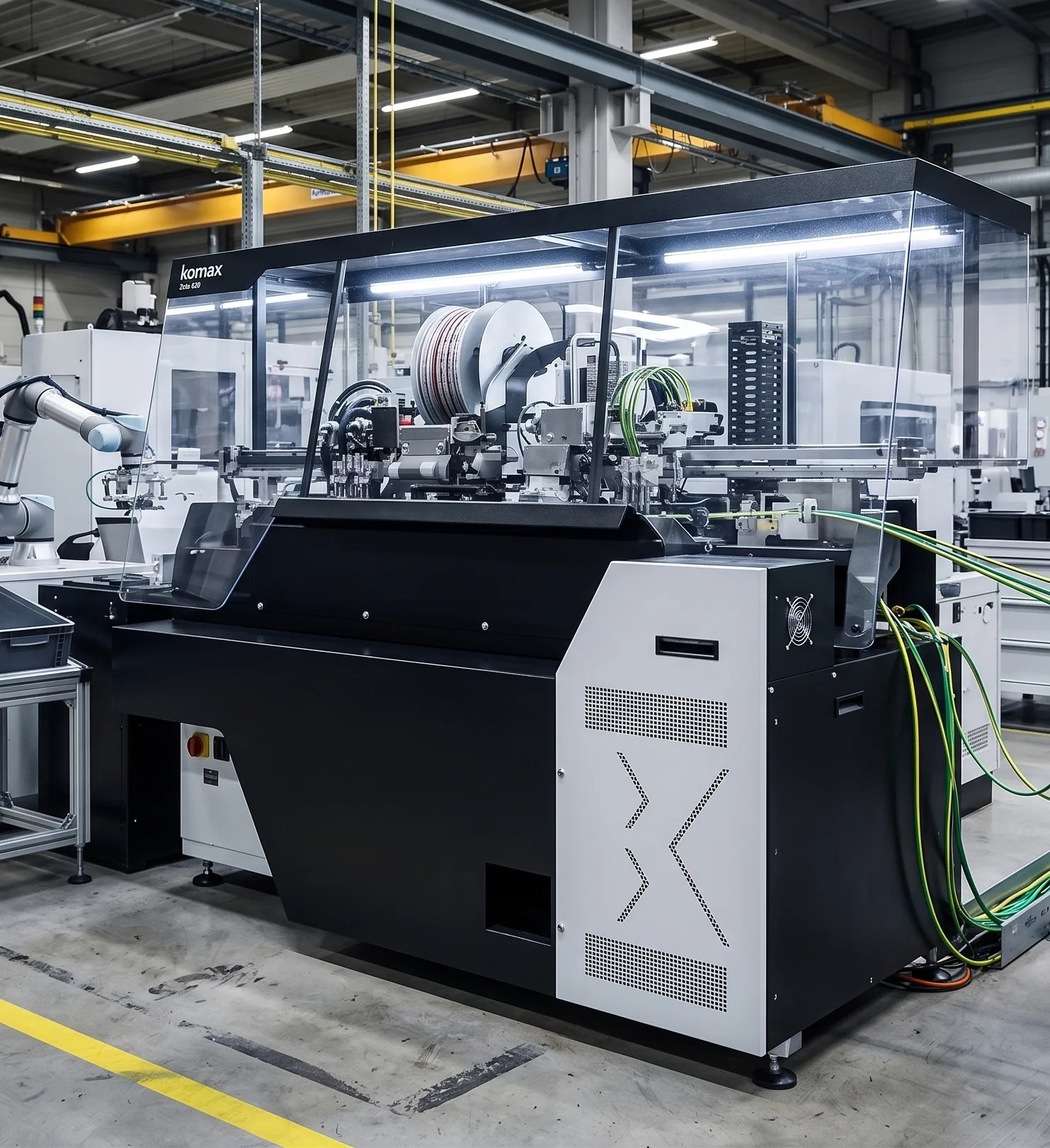
Automatic cut, strip and crimp.
Wire pre-tinning and pin insertion.
Twisting, bundling and lacing.
Heat-shrink and braided sleeving.
Connector overmolding for sealed assemblies.
Custom formboard construction for branched harnesses.
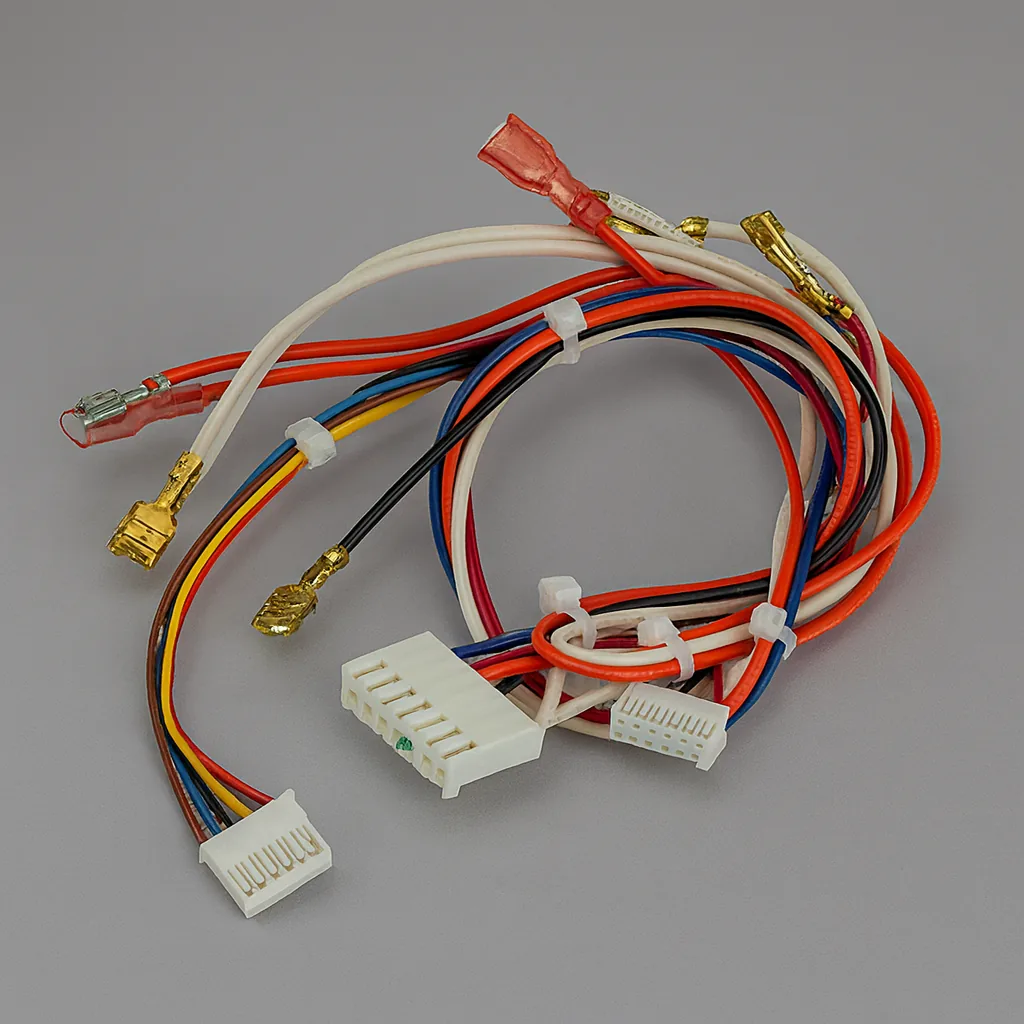
Harness types we build
Internal board-to-board (FFC / FPC, IDC).
Sealed automotive harnesses (Deutsch, Molex, TE Superseal).
Industrial control and signal harnesses.
Power and ground harnesses up to 8 mm² conductor.
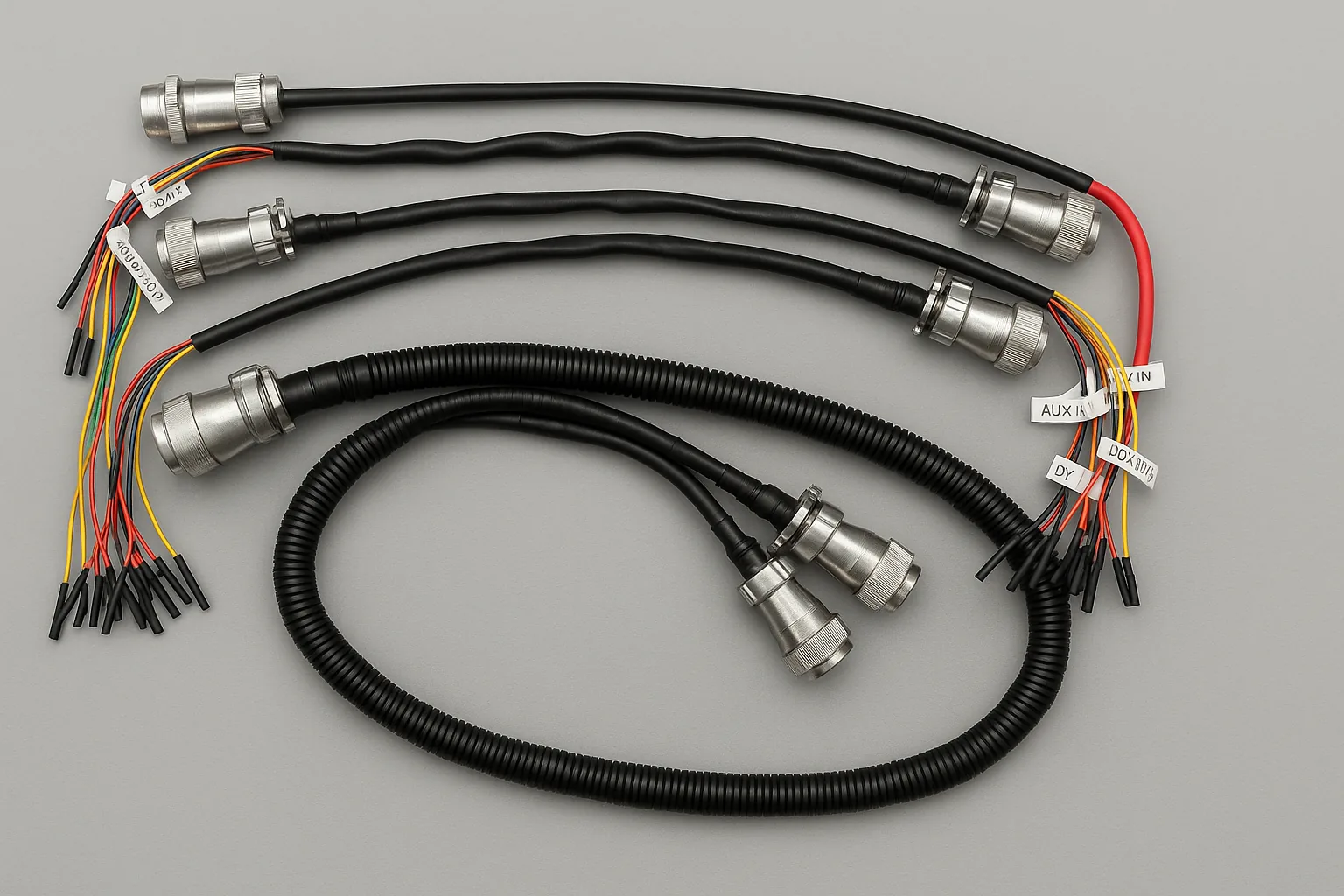
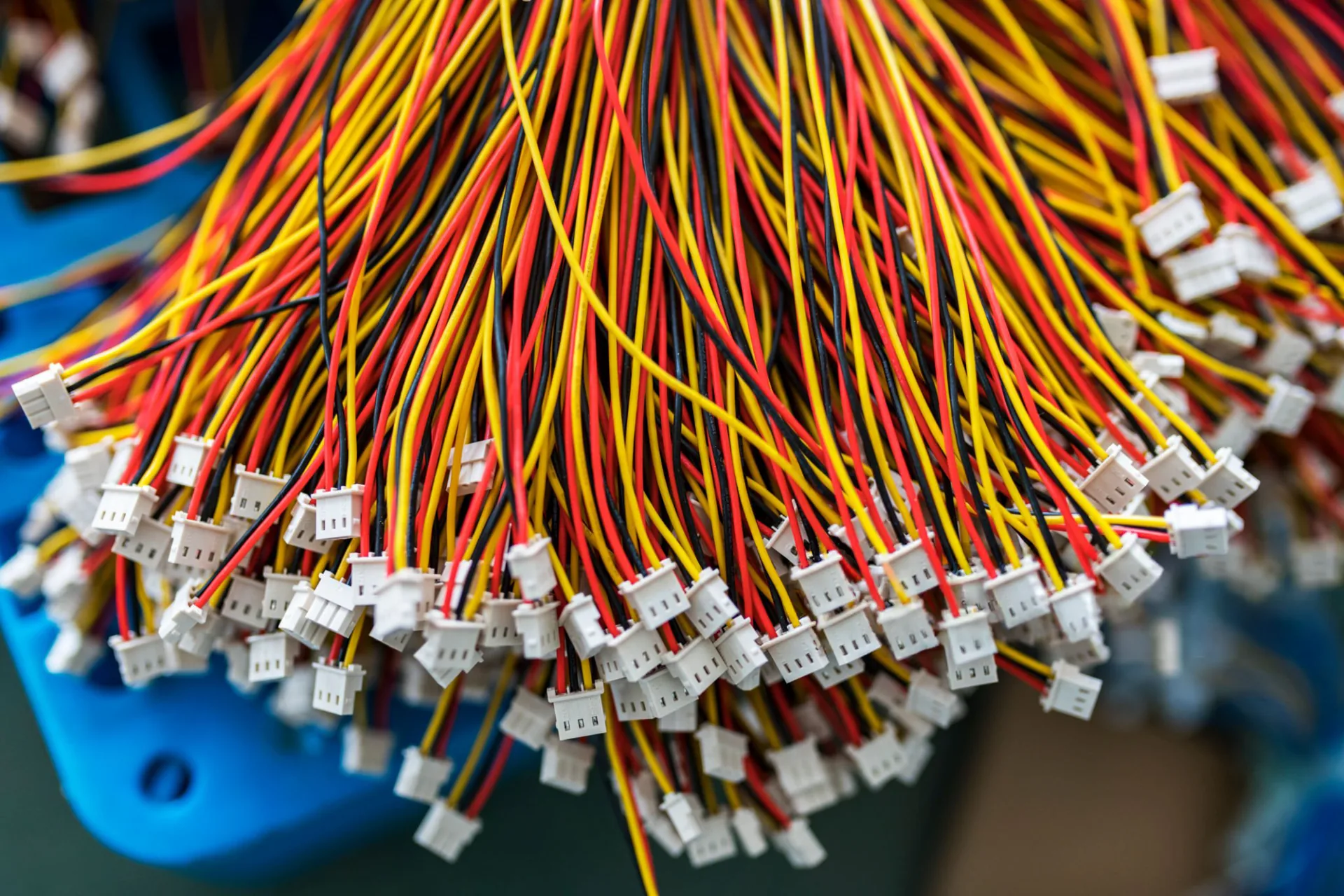
Wire and conductor specifications
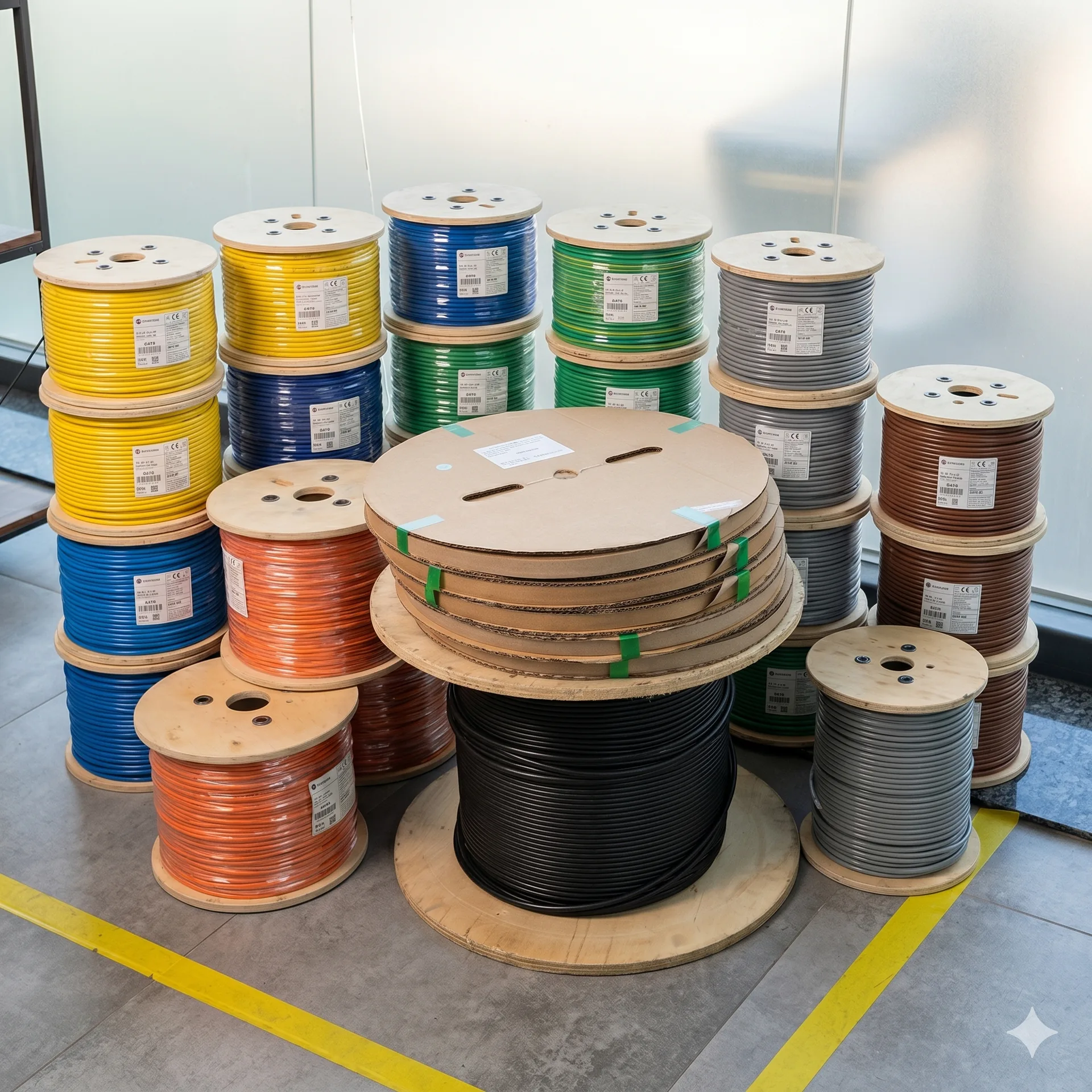
| Wire types | PVC, XLPE, silicone, FEP, PTFE |
|---|---|
| Conductor sizes | AWG 30 to AWG 6 (≈ 0.05 mm² to 16 mm² with lug) |
| Max routine conductor | 8 mm² in production cycle |
| Shielded cable | Foil and braid; drain wire termination supported |
| Sealed cable | Per drawing (silicone-jacketed, halogen-free, etc.) |
| Voltage rating | Specified in the drawing; 600 V routine |
Crimp quality control
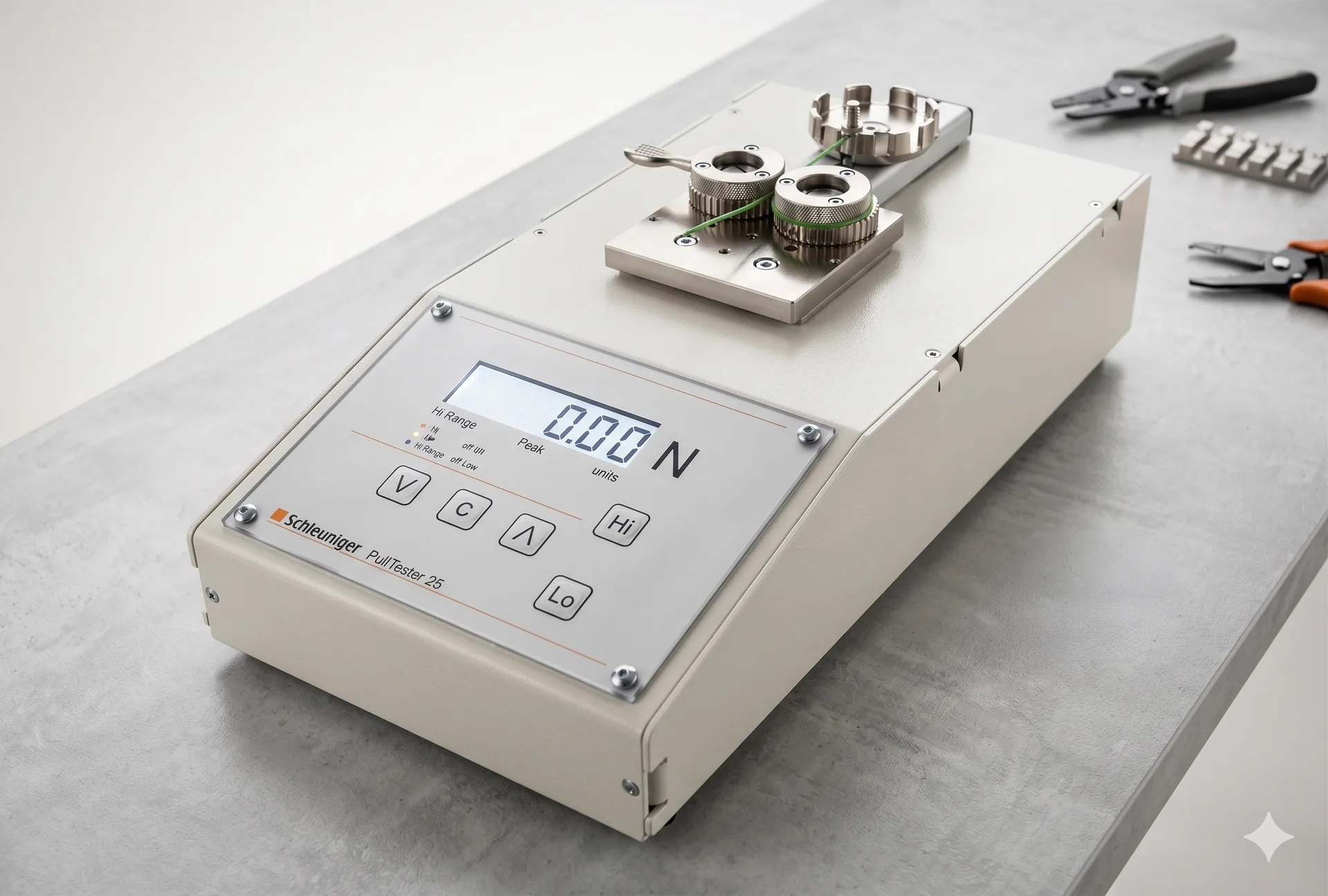
- Pull-force testing per crimp specification — sample plan documented per program.
- Crimp height measurement on production samples per shift.
- Cross-section analysis on first article and on quality challenges.
- Calibrated crimp tools with documented die / wire assignment.
- Crimp acceptance criteria aligned with IPC/WHMA-A-620.
Connector handling and overmolding
- Insertion verification (audible click + visual + push-back) on critical connectors.
- Overmolding for sealed assemblies in customer-specified or in-house-made molds.
- Strain-relief boots installed per drawing.
- Connector keying respected and verified at first article.
- Sealed connector cavity plugs installed in unused cavities per spec.
Validation and testing
- 100% continuity and shorts test on production fixtures.
- Hi-pot and insulation resistance testing on demand.
- Pull-force sampling per crimp specification.
- Visual inspection per IPC/WHMA-A-620 acceptance criteria.
- Functional testing where customer specifies (e.g. RF return loss for coax).
Documentation per lot
Wire list, connector pinout and label sheet attached to each shipment.
Per-unit serial label on request.
Continuity test pass / fail logs.
Crimp pull-force sample reports.
Photo documentation for first article and key revisions.
What we need in the manufacturing package
Wire list with from-pin / to-pin, wire color, gauge, length.
Connector specification per end (manufacturer, MPN, gender, keying).
Formboard drawing (1:1 if possible) with branch lengths and orientation.
Sealing class and overmold material per drawing.
DFM tips for harnesses
- Avoid over-specifying wire colors; standard AWG color codes simplify procurement.
- Specify branch lengths with realistic tolerances — a 1 mm tolerance on a 500 mm branch raises rework rate.
- Group same-gauge wires where possible — bundle and lacing time drops.
- Use sealed connectors only where the application demands them; sealed connectors raise unit cost notably.
- If the harness will be hand-installed in the field, provide an installation drawing — production can reflect that in branch orientation.
Common pitfalls we see in harness handoffs
- 1. Wire list provided without crimp specification — production defaults to a generic die, pull-force fails the customer test.
- 2. Formboard drawing in PDF only without 1:1 scale — branch lengths drift.
- 3. Sealed connector specified but the wire jacket diameter is outside the seal range — first article fails IP test.
- 4. Label position not defined — labels rotate during installation, become unreadable.
- 5. Heat-shrink shrink ratio not stated — operator picks a generic ratio, sealing performance varies.
- 6. No acceptance class stated — Class 2 vs Class 3 inspection criteria diverge significantly.
Compliance options
| IPC/WHMA-A-620 Class 2 | Standard for industrial / consumer / commercial. |
|---|---|
| IPC/WHMA-A-620 Class 3 | On request — high-reliability programs. |
| Automotive sealing | IPx7 / IPx9K achievable with overmolding. |
| RoHS compliance | Default; non-RoHS materials only on explicit request. |
| REACH SVHC | Material declarations available on request. |
Next step
Send your manufacturing package to start scope review.